Relaxed basics
Start with relaxed basics
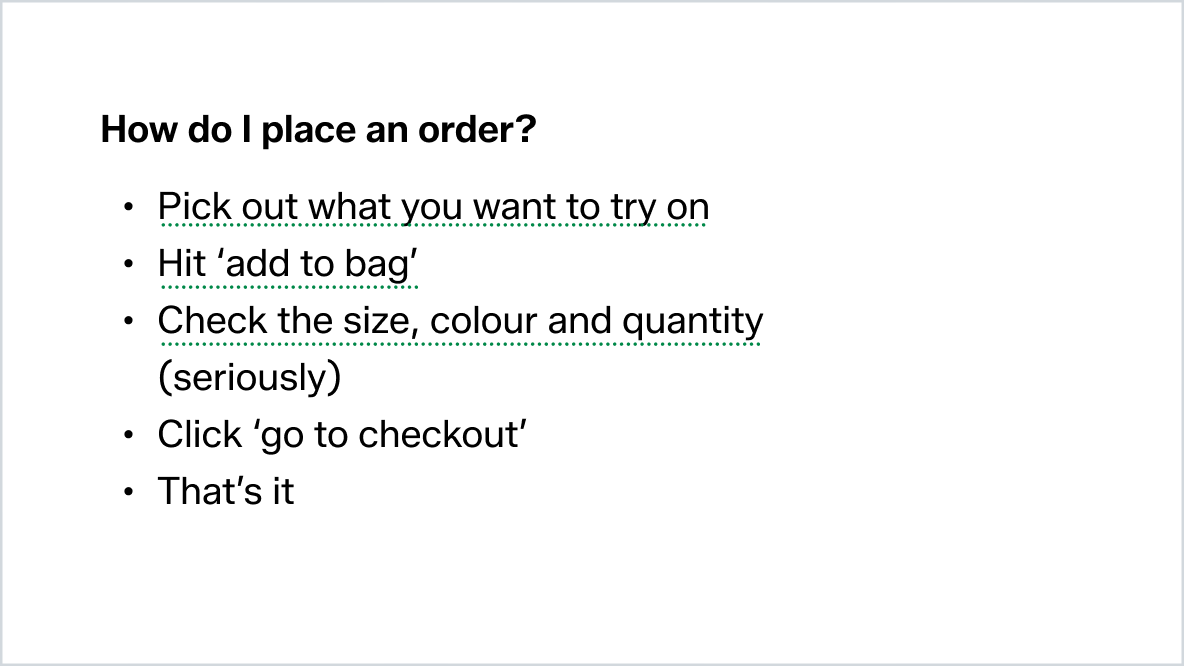
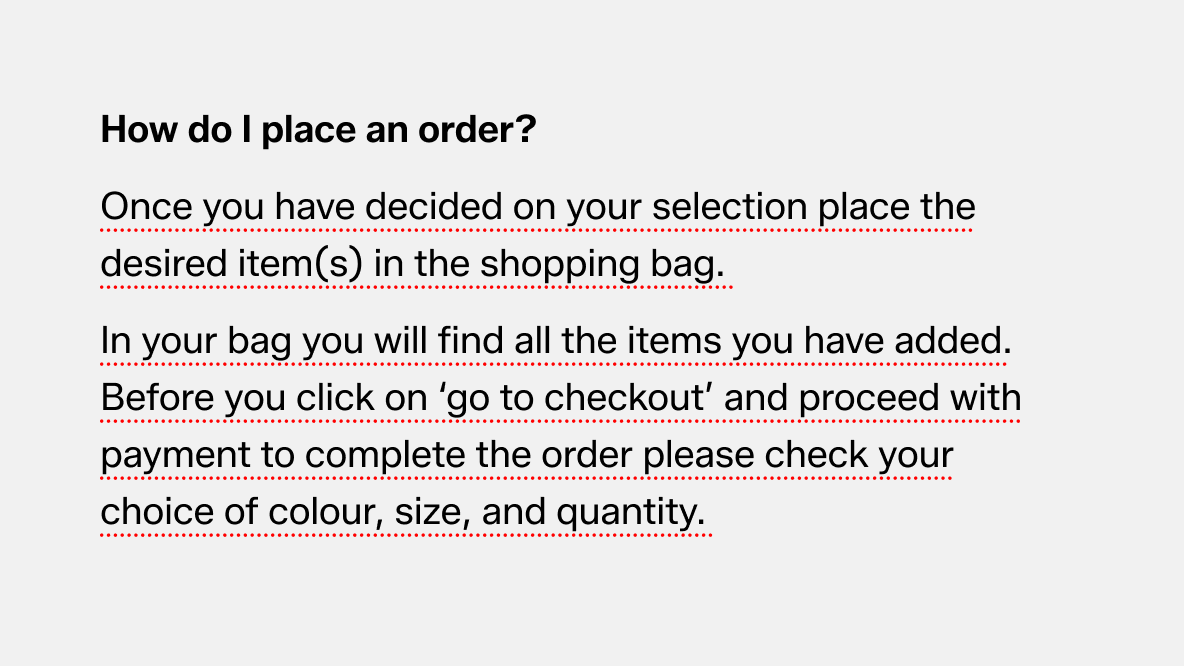
Quality basics might be simple – but they’re essential. We use these everywhere so our voice sounds like a 1:1 conversation.




How to write with relaxed basics
Use everyday words
Use informal words. The kind you’d say in a regular conversation.
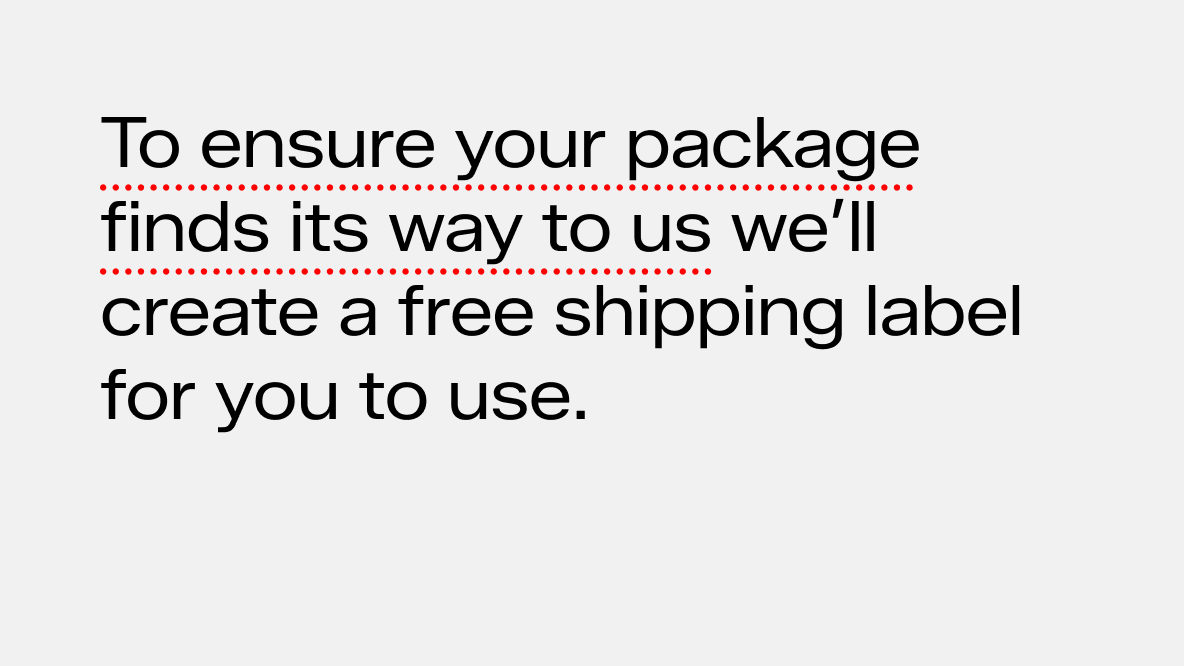
That includes contractions – shortened words like ‘we’re’, ‘can’t’ and ‘here’s’.
Only use business jargon when the audience will understand it, and no other word will do.

Keep sentences simple
Use short, simple sentences. It keeps our energy up and readers reading.
Stay under 25 words and one ‘idea’ per sentence. First, make your point clear – then, make it brief.
This is about being engaging and accessible, not blunt. Our personality is always welcoming.
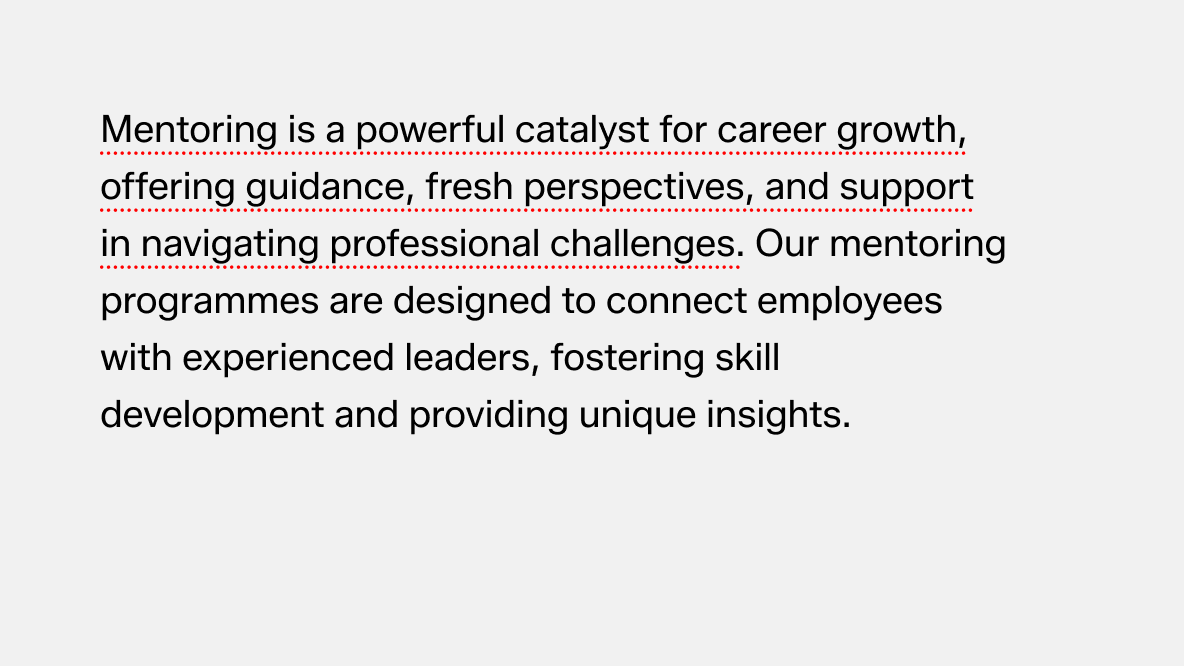
Get to the point
Put the most important information first – and cut out filler.
We want people to get what we’re saying without having to work for it.
Watch out for words that aren’t saying something:
Using three words when one will do.
Qualifying adverbs (like ‘slightly’, ‘very’ or ‘really’). Instead, use stronger verbs.
Lists of four or more things in a sentence. Cut the list down to three – or use bullet points.


Get personal with pronouns
When we talk about ‘Zalando’ and ‘customers’ or 'partners', it really kills the connection. It sounds like we’re talking about people, not to them.
Instead, use ‘we’ and ‘our’ for us. And the singular ‘you’ for our audiences, so we’re talking person to person. That goes for customers, partners, colleagues and everyone else.
There are a few exceptions: we use the third-person for press releases, legal documents, or to refer to the company e.g. ‘Explore your career opportunities at Zalando.’


Write in the active voice
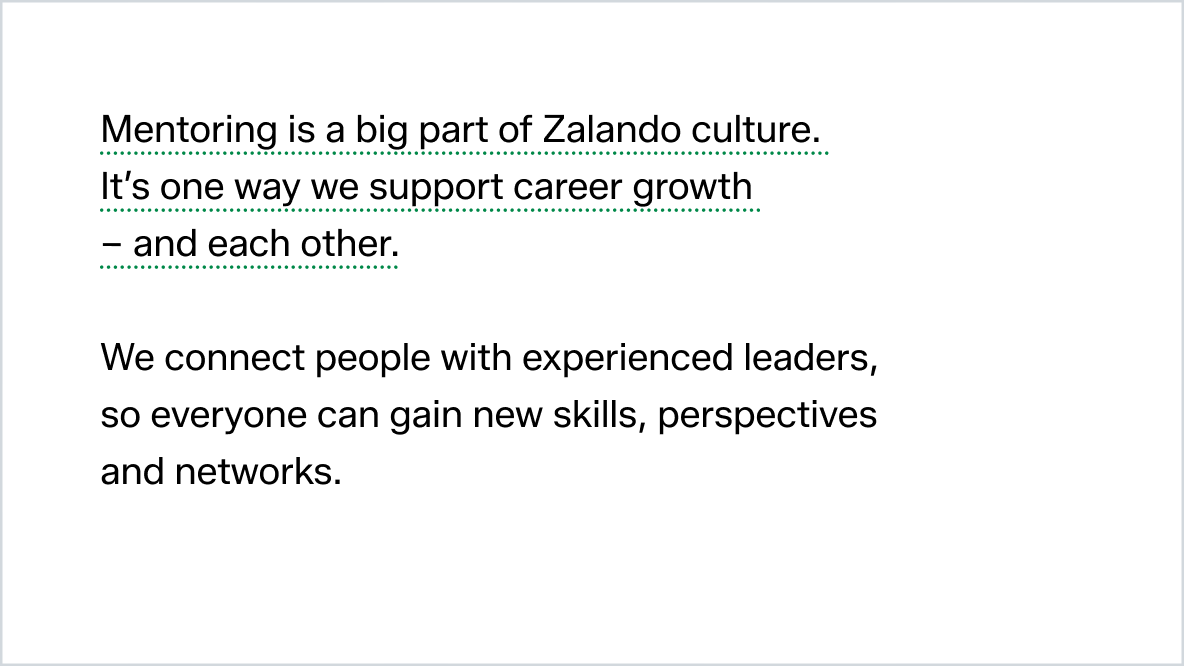
That means putting the subject before the action, and always saying who’s doing what.
We avoid the passive voice. It sounds impersonal and detached, at best. And at worst, like we’ve got something to hide.

Break up long text
For quicker, easier reading, make your writing scannable.
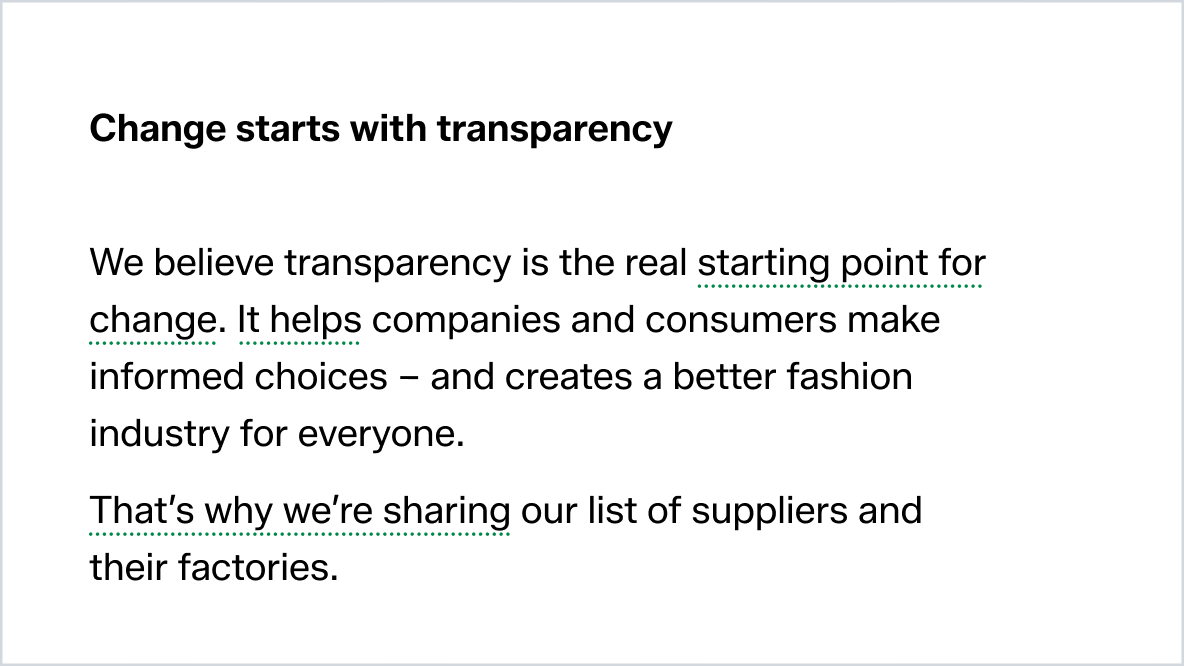
Use short paragraphs for regular breaks. Add subheadings to guide the reader. And use bullet points to give lists or instructions.